Conventional Short-Course Model
- Technique demonstration
- Passive observation
- Limited procedural exposure
- Completion-based certificate
- Little post-course support
- Limited outcome visibility
IIOHR Clinical Immersion Programme
Comprehensive live patient training for doctors and nurses—from diagnosis, patient assessment and supervised surgery to case auditing, mentorship and support through your first independent cases.
Real patients. Expert supervision. Ongoing clinical support.
For doctors, nurses and clinical teams developing careers or services in hair restoration medicine.
Supported by FiOS clinical infrastructure, HairAudit outcome review and long-term hair-loss science from the Hair Longevity Institute.
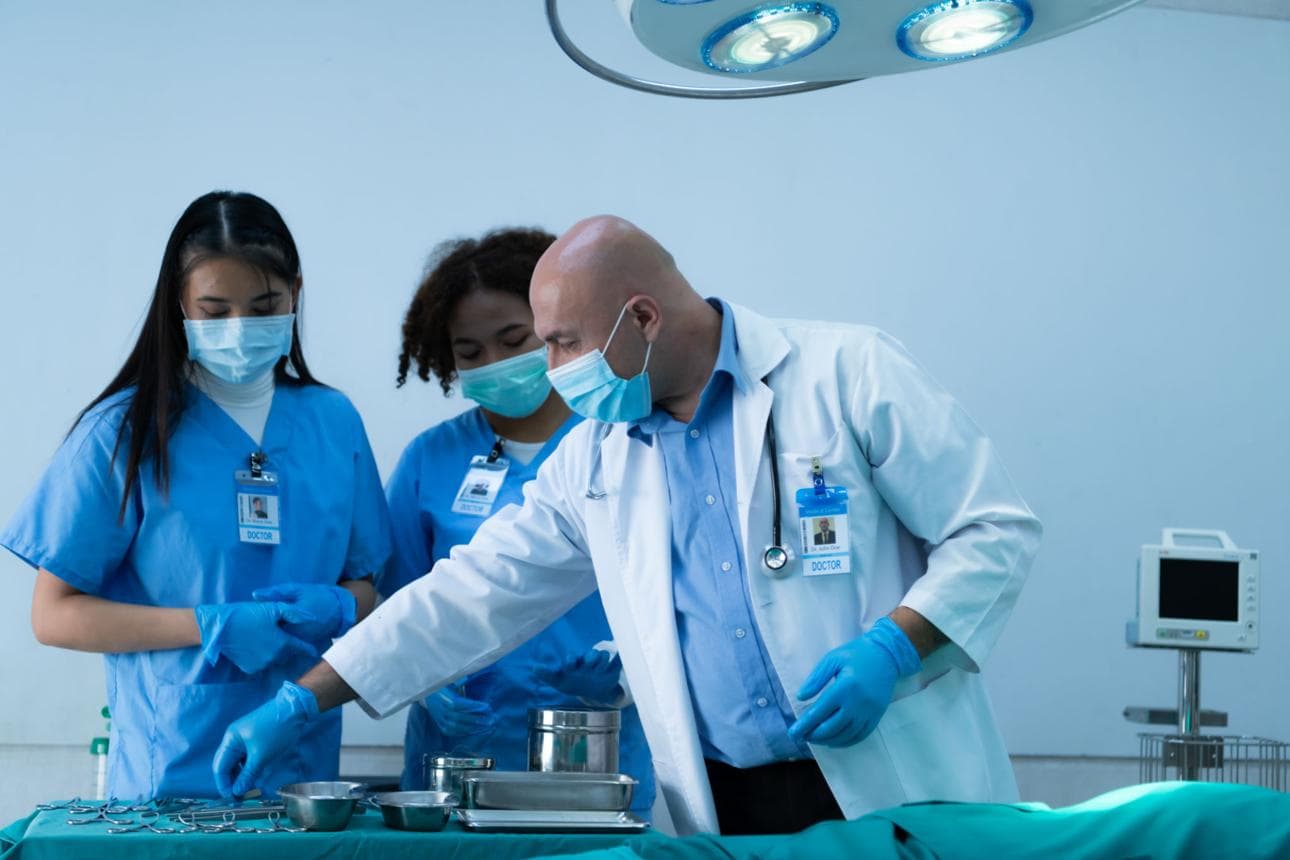
Supervision, participation and clinical confidence in a live clinical environment.
Professional development
Many hair restoration programmes focus on demonstrating a technique. IIOHR focuses on developing safe, capable and accountable clinical professionals.
Real patient training. Expert clinical supervision. Ongoing support beyond the programme. The IIOHR Live Patient Training Programme combines foundational education, supervised real-patient experience, competency assessment, ongoing mentorship, structured clinical auditing and long-term hair-loss education.
The programme combines
Conventional Short-Course Model
IIOHR Development Model
Connected clinical model
IIOHR training connects education with the systems, auditing tools and scientific knowledge used to assess, plan, document and review real patient care.
IIOHR delivers the education and supervised clinical training. The programme is supported by the clinical infrastructure, auditing capability and scientific knowledge developed through FiOS, HairAudit and the Hair Longevity Institute.
Planning, Workflow and Documentation
Clinical planning, workflow, documentation and patient journey support
Case Review and Outcome Intelligence
Structured case review, evidence analysis and outcome auditing
Hair-Loss Science and Long-Term Preservation
Hair-loss diagnosis education, scalp health and long-term preservation knowledge
FiOS, HairAudit and the Hair Longevity Institute support learning and clinical improvement. They do not replace clinical judgement, independently certify every participant, or provide medical registration.
Hair-loss science
Successful hair restoration is not only about extracting and implanting grafts. Clinicians must understand why hair loss is occurring, how it may progress, how to protect existing hair and when medical, regenerative or scalp-health interventions should form part of the treatment plan.
The goal is not only to train practitioners to perform a procedure, but to help them manage the patient’s complete hair-restoration journey.
Through the Hair Longevity Institute relationship, participants can develop a broader understanding of:
Professional pathways
Distinct clinical pathways for physicians and nursing teams—connected through the same standards of safety, documentation, and outcome review.
For doctors
For nurses and clinical teams
Practical participation is adapted to qualifications, experience, jurisdiction, demonstrated competence and professional scope of practice.
Clinical judgement
Every patient differs. Live experience develops judgement—not just procedural repetition.
Live patient training teaches participants to assess the person in front of them, adapt safely, recognise limitations and understand how decisions made before and during surgery may influence long-term outcomes.
Patient variables
The IIOHR training journey
Progression is staged by readiness, demonstrated competence, patient consent and professional scope of practice.
01
Hair and scalp science, hair-loss diagnosis, terminology, clinical safety, professional responsibilities and procedure workflow.
02
Structured observation of consultation, patient assessment, treatment planning, theatre preparation, procedure and aftercare.
03
Role-appropriate practical tasks, supervised clinical involvement, structured skill development and team integration.
04
Practical participation under direct supervision, with readiness-based progression and role-specific responsibilities.
05
Assessment across clinical knowledge, practical skills, patient safety, documentation, communication, teamwork and decision-making.
06
Case discussion, treatment-plan review, outcome auditing, difficult-case support, protocol improvement and continuing development.
Beyond the programme
Some of the most difficult clinical decisions arise after formal training, when practitioners begin assessing and managing their own patients. IIOHR provides a pathway for continued support as experience grows.

Structured review
Structured case auditing may consider diagnosis, patient selection, donor management, graft estimates, extraction patterns, graft handling, implantation strategy, clinical photography, procedure records, healing, density development, patient communication, complications, treatment adherence, existing-hair preservation and long-term planning.
Domains that may be reviewed
Concept illustration only—no real patient information is shown. HairAudit is used for structured review and outcome assessment support.
Full-journey education
Every stage contributes to patient safety, clinical quality and long-term success.
Individuals and clinics
IIOHR can support individual doctors and nurses, clinical assistants, existing surgical teams, new clinics, multidisciplinary teams, clinic owners, international partners and experienced practitioners seeking refinement.
Who we support
Clinic development may include
Differentiation
01
Clinical participation under structured supervision.
02
Training extends from diagnosis and preservation through surgery and long-term follow-up.
03
Progress is based on readiness and demonstrated ability.
04
Support can continue as participants enter clinical practice.
05
Cases can be reviewed to support continuous improvement.
06
FiOS supports planning, workflow and documentation.
07
The Hair Longevity Institute broadens education beyond surgery alone.
08
Training can extend into teams, protocols, governance and operational systems.
Professional standards
Practical participation is determined by readiness, competence, patient consent and applicable professional and legal requirements—not simply attendance.
Participants are expected to
Who should apply
Suitable applicants may include doctors entering hair restoration, doctors seeking structured clinical development, nurses developing hair restoration skills, surgical team members, existing clinic teams requiring standardisation, clinics building a new service, experienced practitioners seeking auditing, international clinicians seeking mentorship, clinic owners developing systems and governance, and clinicians seeking stronger hair-loss and preservation knowledge.
Applications are assessed individually to determine the most appropriate pathway.
FAQ
Direct answers for clinicians evaluating live patient hair restoration training.
Yes, subject to eligibility. Beginners may start with foundational education and structured observation before guided participation. Progression depends on demonstrated readiness, professional qualifications and applicable scope of practice.
Next step
Choose a training pathway that develops more than technique. Build clinical judgement, practical confidence, documented competency and access to ongoing support throughout your professional journey.
Tell us about your qualifications, current experience, intended role, location and training goals.
Applications are reviewed individually to recommend the most appropriate programme.
Looking for India live-site tiers and investment detail? View the India Clinical Education Academy.
Application
Share your qualifications, experience and training goals. The IIOHR team will review your application and recommend the most appropriate pathway.
IIOHR
Clinical education, live patient experience and continuing professional development for doctors, nurses and clinic teams in hair restoration medicine.
Apply to IIOHR →Training
Clinical Ecosystem
© 2026 IIOHR. All rights reserved.